Pawfection: A Pet Care Website
How might we create an accessible and inclusive pet care platform that seamlessly meets the needs of users with diverse abilities?
How might we create an accessible and inclusive pet care platform that seamlessly meets the needs of users with diverse abilities?
How might we create an accessible and inclusive pet care platform that seamlessly meets the needs of users with diverse abilities?
The Problem
Users with disabilities often face significant challenges navigating online platforms due to inaccessible design elements, such as
• Poor navigation for assistive technology users.
• Inconsistent design standards.
• Difficulty completing essential tasks like booking services or purchasing products.
These issues lead to reduced user satisfaction and limited audience reach for pet care businesses.
Research
Focus: Understanding Accessibility Challenges
The project focused on accessibility challenges for users with physical (e.g., Duchenne muscular dystrophy), visual (e.g., photophobia), cognitive (e.g., Alzheimer’s), and auditory (e.g., tinnitus) impairments, aiming to design solutions that catered to a diverse range of users and promoted inclusivity.
Accessibility Audits
Evaluated competing platforms against WCAG standards and identifying gaps like poor text contrast and inaccessible navigation.
Storytelling
Developed personas and scenarios illustrating challenges faced by users with disabilities. Storyboarding showcased the transformation:
Before: Frustration due to inaccessible design, poor contrast, and hard-to-use buttons.
After: Seamless booking and shopping flows with WCAG-compliant design elements like large touch targets and consistent layouts.
Design Process
Wireframes
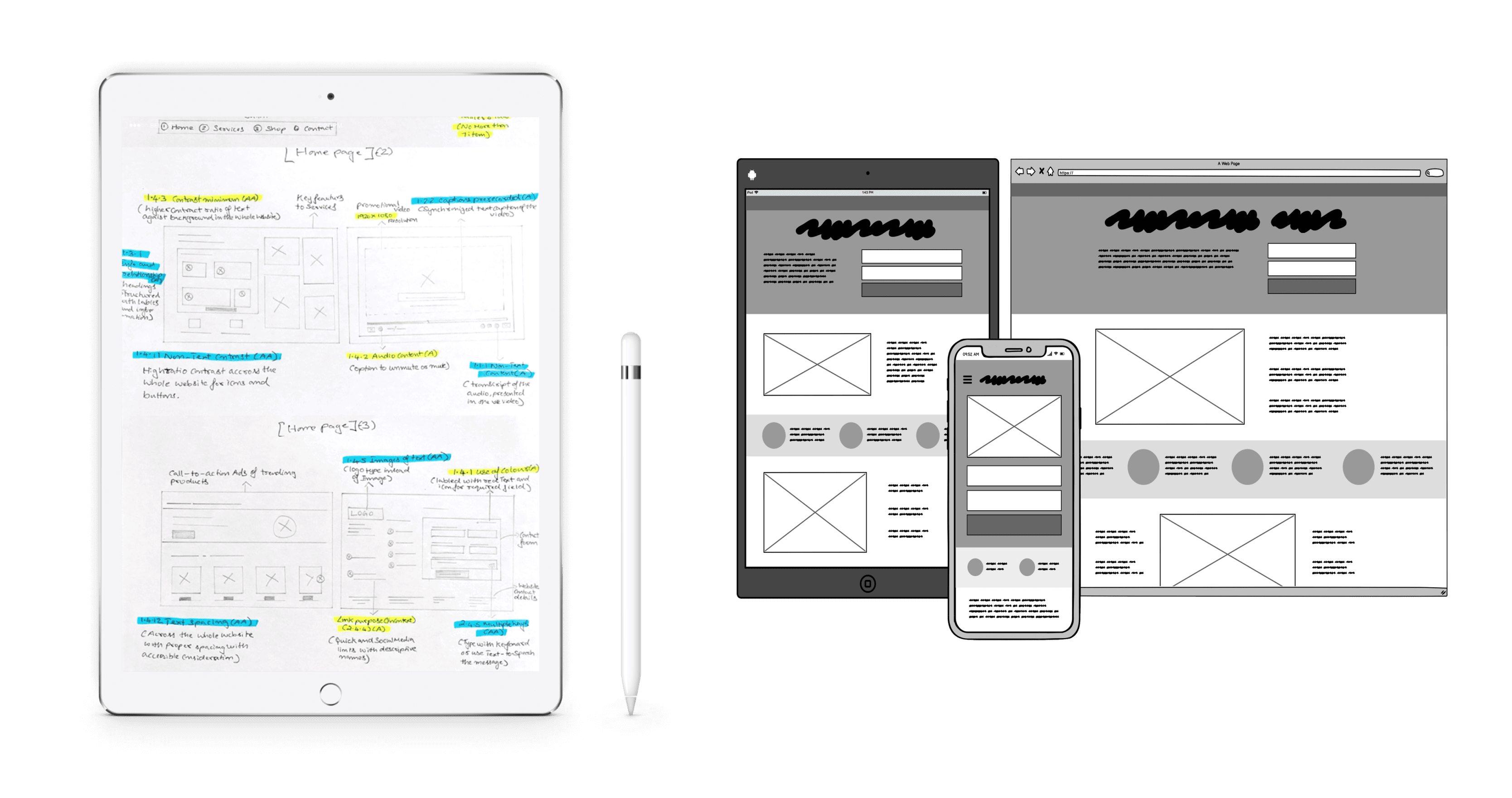
The paper prototypes focused on creating accessible layouts with clear navigation and large touch targets. Features included onboarding for new users and simplified checkout flows, with annotations to implement WCAG guidelines.
Prototypes
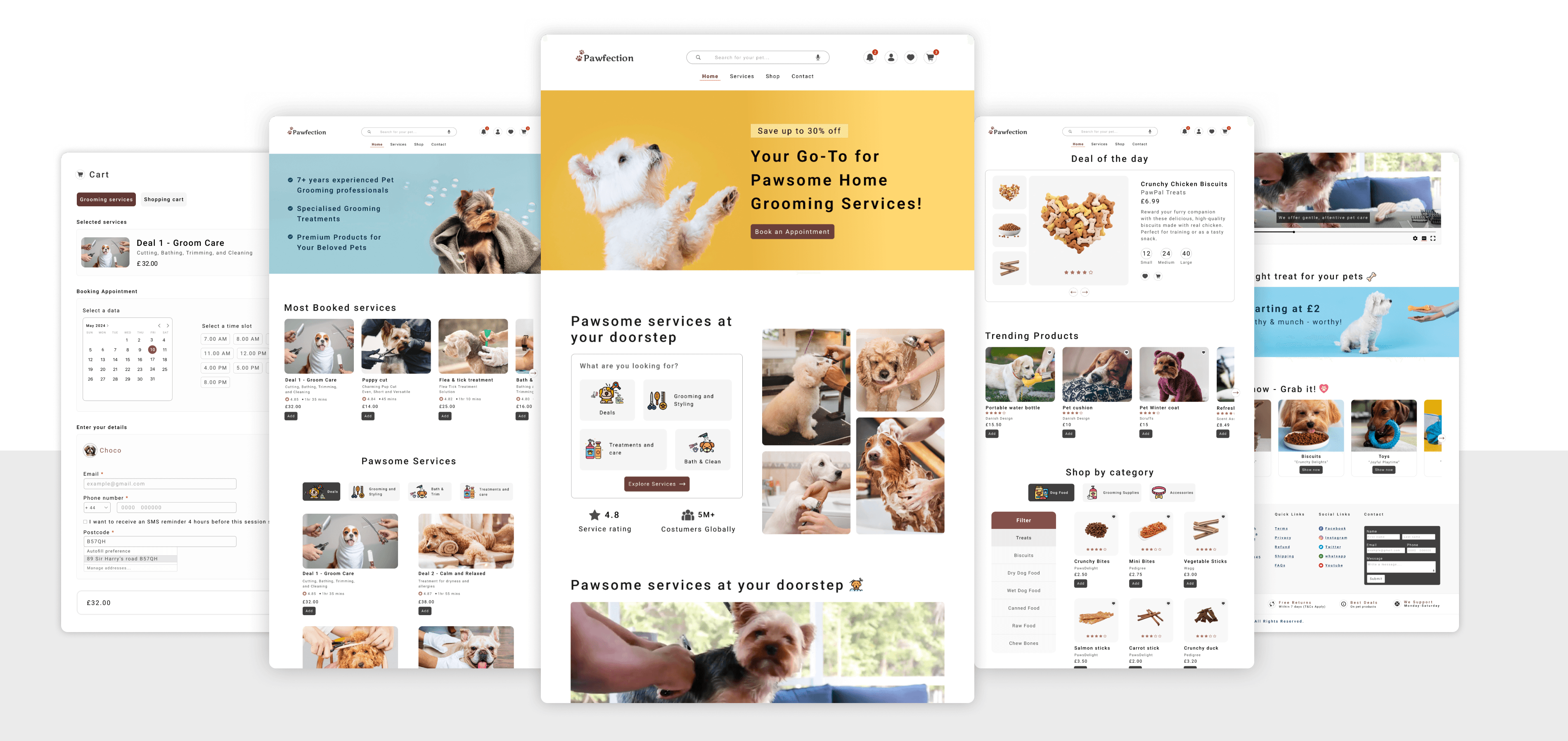
High-fidelity prototypes were designed in Figma to ensure accessibility for individuals with various impairments by meticulously integrating WCAG guidelines. Key features included:
• WCAG-compliant elements such as keyboard navigation and text magnification.
• Consistent layouts with fixed headers and essential action icons.
• High contrast ratios to enhance readability for visually impaired users.
• Accessible navigation with fixed headers and prominent action buttons.
Multi-Platform Accessibility
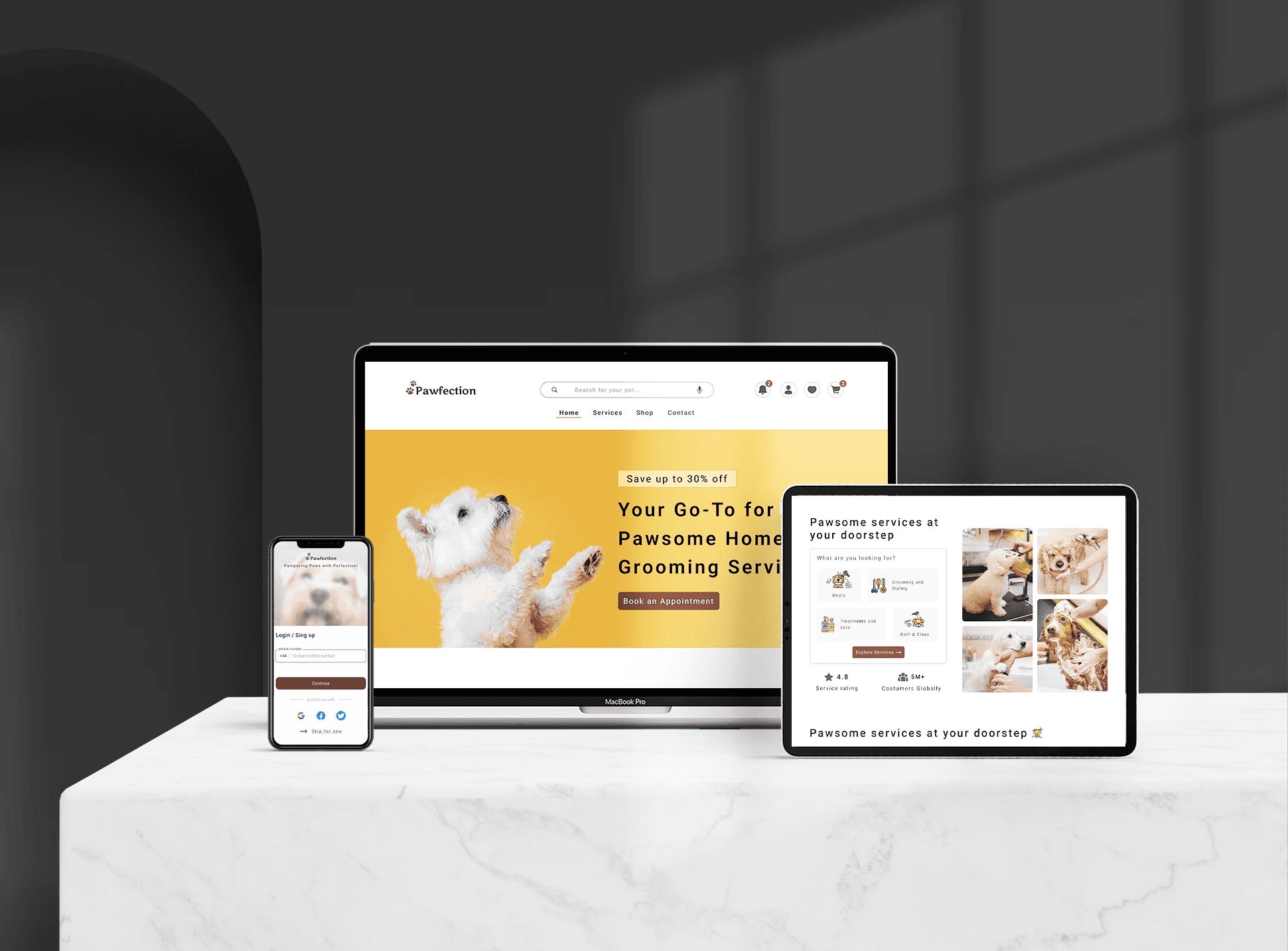
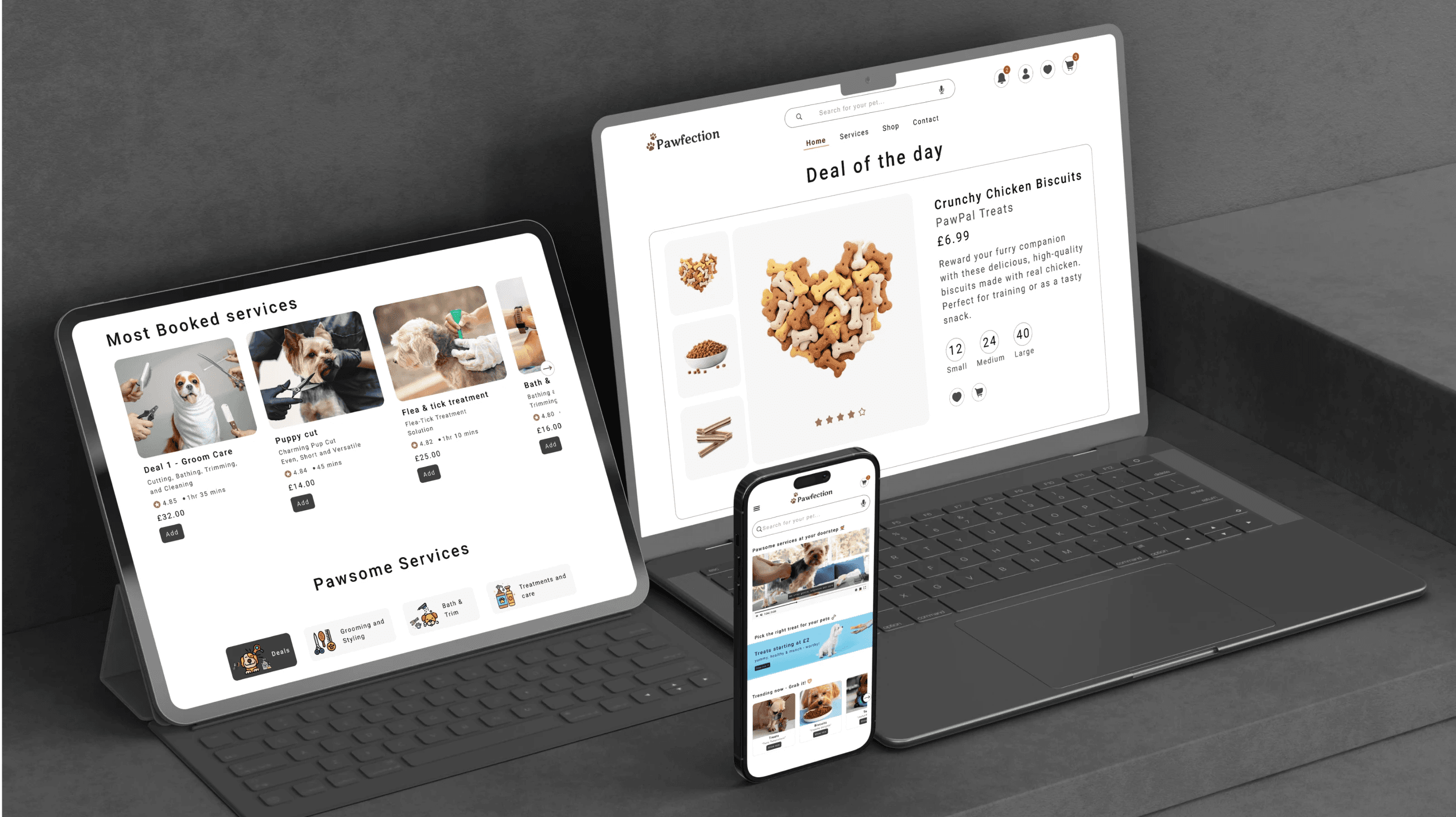
The Pawfection website redesign prioritized accessibility across devices by implementing flexible layouts responsive to various screen sizes and orientations, following WCAG guidelines.
User testing and iteration
Conducted a heuristic evaluation based on Don Norman's usability principles of interaction to assess usability and gather actionable feedback.
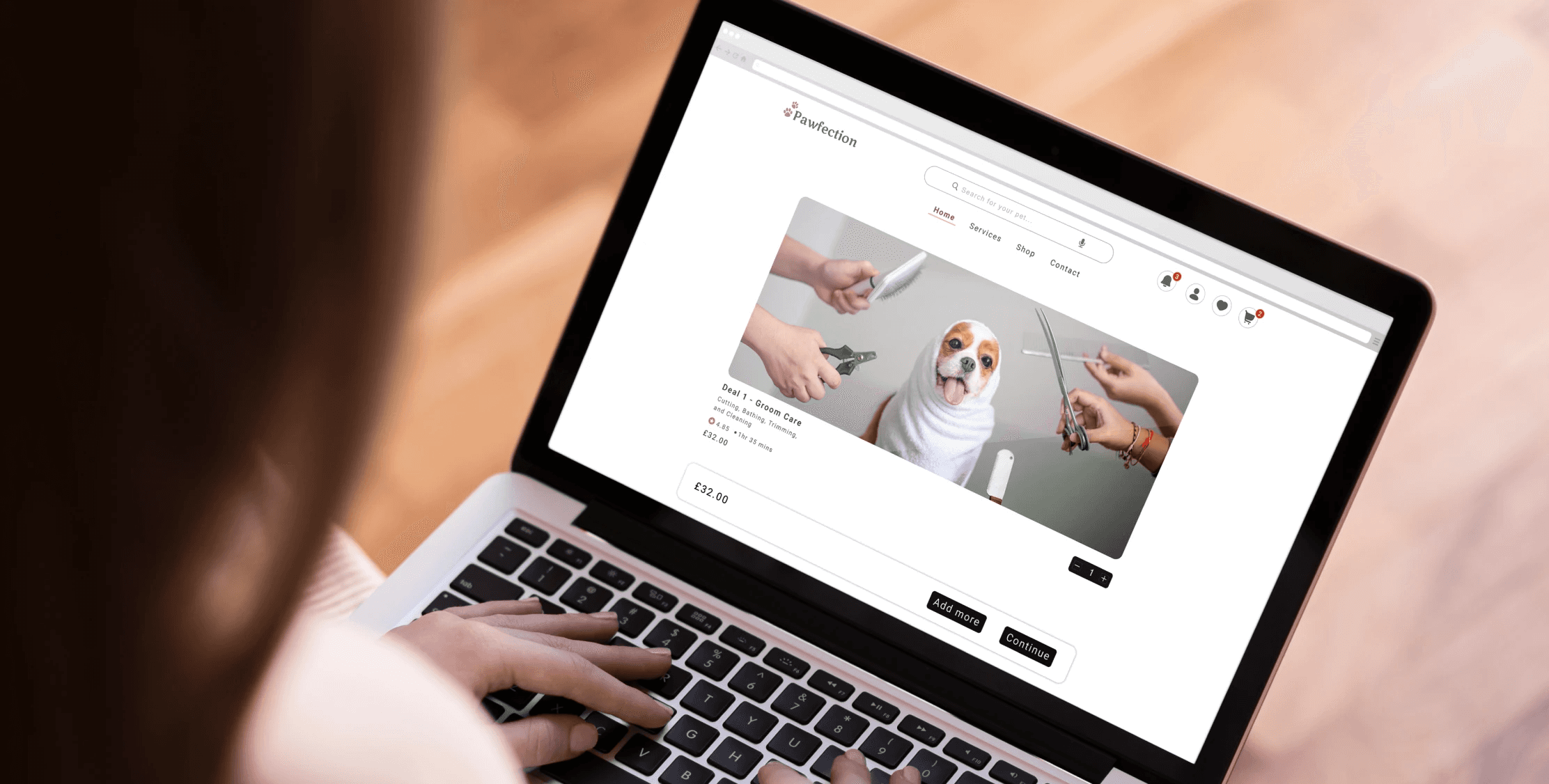
Based on the feedback, design iterations were implemented, including adding a "Proceed to Cart" pop-up for a smoother user flow and increasing button sizes to comply with WCAG guidelines, enhancing both usability and accessibility.
Success Metrics
Recorded a 40% increase in client satisfaction scores post-deployment, reflecting enhanced usability and functionality.
What I learned
This project taught me the importance of designing for inclusivity by applying WCAG guidelines and gathering feedback from users with disabilities. It highlighted how user-centered design and accessibility standards are essential for creating equitable and seamless digital experiences for everyone.
The Problem
Users with disabilities often face significant challenges navigating online platforms due to inaccessible design elements, such as
• Poor navigation for assistive technology users.
• Inconsistent design standards.
• Difficulty completing essential tasks like booking services or purchasing products.
These issues lead to reduced user satisfaction and limited audience reach for pet care businesses.
Research
Focus: Understanding Accessibility Challenges
The project focused on accessibility challenges for users with physical (e.g., Duchenne muscular dystrophy), visual (e.g., photophobia), cognitive (e.g., Alzheimer’s), and auditory (e.g., tinnitus) impairments, aiming to design solutions that catered to a diverse range of users and promoted inclusivity.
Accessibility Audits
Evaluated competing platforms against WCAG standards and identifying gaps like poor text contrast and inaccessible navigation.
Storytelling
Developed personas and scenarios illustrating challenges faced by users with disabilities. Storyboarding showcased the transformation:
Before: Frustration due to inaccessible design, poor contrast, and hard-to-use buttons.
After: Seamless booking and shopping flows with WCAG-compliant design elements like large touch targets and consistent layouts.
Design Process
Wireframes
The paper prototypes focused on creating accessible layouts with clear navigation and large touch targets. Features included onboarding for new users and simplified checkout flows, with annotations to implement WCAG guidelines.
Prototypes
High-fidelity prototypes were designed in Figma to ensure accessibility for individuals with various impairments by meticulously integrating WCAG guidelines. Key features included:
• WCAG-compliant elements such as keyboard navigation and text magnification.
• Consistent layouts with fixed headers and essential action icons.
• High contrast ratios to enhance readability for visually impaired users.
• Accessible navigation with fixed headers and prominent action buttons.
Multi-Platform Accessibility
The Pawfection website redesign prioritized accessibility across devices by implementing flexible layouts responsive to various screen sizes and orientations, following WCAG guidelines.
User testing and iteration
Conducted a heuristic evaluation based on Don Norman's usability principles of interaction to assess usability and gather actionable feedback.
Based on the feedback, design iterations were implemented, including adding a "Proceed to Cart" pop-up for a smoother user flow and increasing button sizes to comply with WCAG guidelines, enhancing both usability and accessibility.
Success Metrics
Recorded a 40% increase in client satisfaction scores post-deployment, reflecting enhanced usability and functionality.
What I learned
This project taught me the importance of designing for inclusivity by applying WCAG guidelines and gathering feedback from users with disabilities. It highlighted how user-centered design and accessibility standards are essential for creating equitable and seamless digital experiences for everyone.